
Why the next generation of companies will operate on intelligence, not applications.
By Ali Payani | Founder & CEO, Payani AI
For the past two decades, businesses have been told that growth requires more technology.
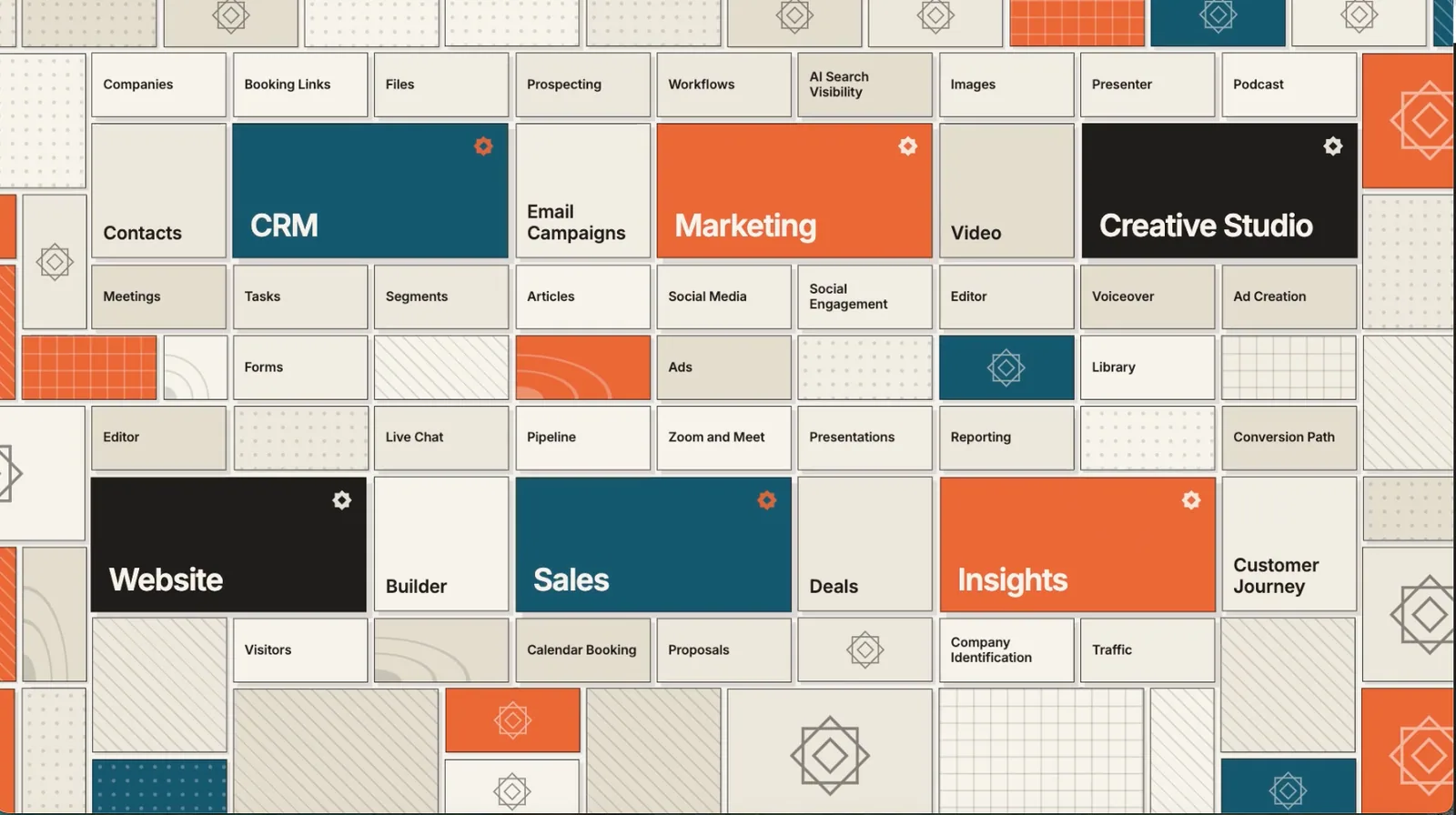
A CRM to manage relationships. A marketing automation platform to nurture prospects. Analytics software to measure performance. Advertising platforms to acquire customers. Another application to connect everything together.
Each promised greater efficiency. Collectively, they created a new operational challenge: businesses now spend an extraordinary amount of effort managing the very technology designed to help them grow.
The problem is not that these applications have failed. Most have fulfilled their original purpose.
The problem is that the operating model they were built for is becoming outdated.
We are entering a period in which software will no longer be defined primarily by the functions people can perform inside it, but by the outcomes intelligent systems can help deliver.
The next evolution of enterprise technology is not more software. It is software that can reason, coordinate, and act.
The Architecture of the Last Era
Traditional business software was designed around a straightforward assumption: humans make decisions, and applications help execute them.
The CRM stores customer information. The analytics platform presents results. Marketing software sends campaigns. Sales teams interpret buying signals and decide what to do next.
Intelligence resides primarily with the people operating these systems.
This architecture created a fragmented commercial environment. Data moves between applications, but context is frequently lost. A customer's interaction with an advertisement may be visible in one platform, their website activity in another, and their sales conversation somewhere else.
The organization possesses information, yet struggles to transform that information into coordinated action.
Adding artificial intelligence to each individual application does not necessarily solve the problem. In some cases, it simply produces a more sophisticated collection of disconnected tools.
A fragmented technology stack with AI features is still a fragmented technology stack.
This distinction matters because the next generation of business transformation will not come from making individual applications incrementally smarter.
It will come from rethinking the architecture itself.
From Systems of Record to Systems of Intelligence
Historically, enterprise software has evolved through distinct stages.
Systems of record established reliable repositories for business information.
Systems of engagement made it easier for employees and customers to interact across digital channels.
Systems of automation enabled businesses to execute repeatable processes with less manual effort.
The emerging stage introduces something fundamentally different: systems of intelligence and action.
These systems are designed to interpret information across functions, understand commercial context, recommend decisions, and execute approved actions within defined boundaries.
Consider a business experiencing a decline in customer acquisition.
In a conventional environment, the marketing team might review several dashboards, identify underperforming campaigns, compare historical conversion data, consult sales reports, and develop a response.
An AI-native environment could connect those signals, detect the change, investigate contributing factors, propose corrective actions, and execute authorized adjustments while making the reasoning visible to the people responsible.
The distinction is not simply speed.
It is the movement from software that waits for instructions toward software that participates in the operating process.
The Next Competitive Advantage Is Context
Artificial intelligence is rapidly becoming more accessible. The underlying models will continue to improve, and many foundational capabilities will become widely available.
That raises an important question: if every company can access powerful AI, where will competitive differentiation come from?
One answer is context.
Generic intelligence can generate content, summarize information, and answer broad questions.
Business intelligence requires something deeper: an understanding of customers, commercial objectives, historical performance, operational constraints, and the relationships among them.
A model may know how to write a marketing campaign. A context-aware commercial system should understand why that campaign matters, which customers it should reach, what business outcome it is intended to produce, and how its performance connects to revenue.
The value of AI increases when intelligence is grounded in the realities of the organization using it.
The companies that benefit most will not necessarily be those deploying the greatest number of AI agents.
They will be those building the most coherent connection between data, intelligence, human judgment, and action.
Marketing and Sales Are Becoming One Continuous System
The separation between marketing and sales has historically been reinforced by organizational structures and software categories.
Marketing generates demand. Sales converts opportunities. Customer success manages relationships after purchase.
But customers do not experience businesses as a collection of departments.
They experience a continuous relationship.
An intelligent commercial architecture can increasingly connect the signals and decisions that shape that relationship, from initial discovery through acquisition, conversion, retention, and expansion.
This creates the potential for a different growth model.
Marketing becomes more responsive to actual buying behavior. Sales becomes better informed by customer context. Customer relationships become less dependent on information being manually transferred between disconnected systems.
Rather than optimizing isolated departmental activities, organizations can begin optimizing the entire commercial journey.
The future of growth is not better alignment between disconnected functions. It is a more intelligent operating model in which those functions share context from the beginning.
The Human Role Becomes More Important, Not Less
The emergence of more autonomous technology inevitably raises questions about the future of marketing and sales professionals.
It is reasonable to expect many repetitive tasks to become increasingly automated. Reporting, segmentation, routine follow-ups, data preparation, and certain campaign operations are especially suited to intelligent assistance.
But execution is only one dimension of commercial performance.
Determining what a brand should represent, understanding complex customer motivations, establishing trust, making ethical judgments, and deciding which opportunities are worth pursuing remain deeply consequential responsibilities.
The objective should not be to remove human judgment from business operations.
It should be to elevate where that judgment is applied.
In this model, professionals spend less time assembling information and coordinating applications, and more time directing strategy, evaluating recommendations, managing exceptions, and creating meaningful customer relationships.
Autonomy without accountability is not progress.
The strongest AI-native systems will combine the capacity to act with transparency, control, and human oversight.
Rethinking the Economics of Growth
One of the most significant consequences of this transition may be economic.
For decades, increasing commercial capacity often meant increasing headcount, acquiring additional software, and expanding operational complexity.
AI-native systems introduce the possibility of a different relationship between organizational resources and business output.
A growing company may be able to coordinate more customer relationships, analyze more information, and execute more sophisticated commercial workflows without expanding its operational infrastructure at the same rate.
This does not mean growth becomes effortless, or that technology eliminates the need for expertise.
It means the economics of execution can change.
The strategic advantage shifts from owning the largest technology stack to operating the most effective intelligence infrastructure.
For smaller businesses, this could make sophisticated capabilities more accessible. For established enterprises, it creates an opportunity to reduce complexity and rethink long-standing processes.
In both cases, the central question changes.
Instead of asking how many applications or employees an organization needs to execute its commercial strategy, leaders can ask how effectively intelligence, technology, and people can work together to achieve it.
Building for the Next Era
This shift is central to the thinking behind Payani AI.
We believe customer relationship management, marketing execution, sales intelligence, and business analytics should not exist as disconnected operational experiences.
They should operate within a unified, AI-native environment designed to understand business context and help organizations move from information to decisions and action.
That vision is not about adding an AI assistant to conventional software.
It is about reconsidering what business software should fundamentally be.
Imagine telling Payani AI: “Every Monday, turn our latest articles into LinkedIn posts, social content, and an email newsletter tailored to our audience.” Rather than manually coordinating multiple applications, an intelligent system could build the workflow, prepare the content, schedule distribution, and execute approved activities. What once required several tools and repeated human intervention could become a single, coordinated process.
The significance extends far beyond content creation. The same intelligence that understands a company's marketing activities should also understand its customers, sales pipeline, commercial objectives, and performance data. It should be capable of connecting insights across these functions and translating them into meaningful action.
An intelligent commercial platform should help people understand what is happening, recognize what matters, determine what should happen next, and carry out appropriate work with clearly defined human control.
Achieving that vision requires more than capable language models. It requires trusted data, connected workflows, reliable execution, security, and a product architecture designed around intelligence from the beginning.
The transition will be gradual, and not every business process should become autonomous.
But the direction is increasingly clear.
The Question Business Leaders Should Be Asking
The next era of commercial technology will not be won by companies that simply accumulate more AI tools.
It will favor organizations that rethink how intelligence moves through their business.
Just as cloud computing changed where software operates, and mobile computing changed how people interact with it, AI has the potential to change who, or what, performs the work.
That is a more profound transformation than another generation of software features.
For business leaders, the question is no longer whether artificial intelligence belongs in their marketing and sales operations.
It is whether those operations are architected for a world in which intelligence can participate directly in how business gets done.
The future is not about managing more software.
It is about building businesses that can operate more intelligently.
Newsletter
Get growth intelligence in your inbox.
Sharp notes on growing with AI and what actually moves revenue. No fluff, unsubscribe anytime.